St Mary's RC Primary School
Reception - St Joseph
Welcome to Reception

Our class saint is St Joseph
Welcome to our wonderful St. Mary's RC Primary School Reception. In Reception, the children have lots and lots of fun . . .every day. Daily they are busy exploring the different areas in our classroom both inside and outside. This has provided great opportunities for the children to explore, discover and learn. Each day is different for the children as they explore various activities in both the indoor and outdoor learning environments. At St Mary's RC Primary School, children feel safe, seen, supported, curious and proud of who they are. We are honoured to share each child’s early years journey.
The Reception Team
The Reception Teachers are: Mrs Farrell, Miss Gerrard and Mrs Khan.
Learning support staff are: Mrs Hussain, Miss Glendon and Mrs Bailey.
Key Dates
P.E. Days
| Monday am | Indoor P.E. |
| Friday am | Outdoor P.E. |
Typical Day
Kind Reminders
The Early Years (Nursery and Reception classes) gate opens at 8:30am and closes at 8.40am. If your child is late you will need to enter the school through the school office. Please ensure your child arrives promptly to school each day.
At the end of the day, the doors open at 3.10pm. Please arrive on time to collect your child.
As in line with our school uniform policy, your child’s PE kit should be as follows:
- Plain navy joggers (no brands or logos).
- A pair of trainers (velcro trainers if they cannot tie their laces independently).
- Your child can wear their usual white polo shirt and navy school jumper on a Friday. The school uniform shop in Heaton Moor sells St Mary’s PE hoodies. These are permitted to be worn on a Friday but please do not feel that you have to purchase one as the normal school jumper is fine.
Home Learning
Partnership with Parents
- It is important for parents and early years settings to have a strong and respectful partnership. This sets the scene for children to thrive in the early years.
- This includes listening regularly to parents and giving parents clear information about their child's progress.
- The help that parents give their children at home has a very significant impact on their learning.
- Some children get less support for their learning at home than others. By knowing and understanding all children and their families, we will offer extra help to those who need it most.
- It is important to encourage all parents to chat, play and read with their children.
Book bags and reading books will be issued on a Friday. These need to be returned each Wednesday.
Within your child's bookbag there will be: a guided reading book, a library book and the weekly phonics activity.
You will have access to your child's QR code to access our Seesaw home learning page.
We use Seesaw to give you the opportunity to share photographs with the class bears, when it is your turn over the weekend.
We use Seesaw to upload maths home learning and the phonic words from that week.
The children love to share their home learning with the other children each morning so please upload anything your child is interested in. They especially like to watch video clips of their friend's learning at home.
Please see a member of staff as soon as possible if you are still having any problems accessing your Seesaw account.

Support at home
Suggested daily activities to complete with your child which will support and help to embed the learning we do within Reception:
- Communication is key! Strong early communication skills enable children to express needs, regulate emotions, and engage in social play. Share attention with your child as often as possible, whether this is during their play or during a walk out to the shops; respond to what they share with you, expand or build upon what they have said and build upon it by adding more words to turn it into a sentence, hold conversations with your child that encourage extended back and forth interactions, giving your child time to listen, process and reply.
- Gross motor skills activities- Gross motor skills are controlled movements that integrate a child's strength, co-ordination, stability, balance and positional awareness. Examples of activities to support this: Swinging, using playground equipment such as a roundabout, spinning cups, seesaws, slides, bouncing on a mini trampoline, using space hoppers, rolling around and down, riding bikes, trikes, scooters and scooter boards, walking on a 'tight rope' (a chalk line or skipping rope on a floor), playing Twister or hopscotch, yoga poses such as downward dog, plank, airplane, tree, dancer, warrior.
- Fine motor skills activities - Fine motor skills are the ability to control small muscles in the hands, fingers and wrists to perform precise, coordinated movements. Examples of activities to support this: painting, using chunky chalk, using zips, using large plastic tweezers to pick up items such as pompoms, fastening buttons, using scissors to snip paper, kneading and modelling with playdough. Developing these skills increases independence and dexterity.
- Regular name writing practice - please encourage your child to practice writing their first name, encouraging them to use an upper-case letter for their initial and lower-case letters for the other letters. Please focus on forming letters correctly and neatly. Please share any writing on Seesaw.
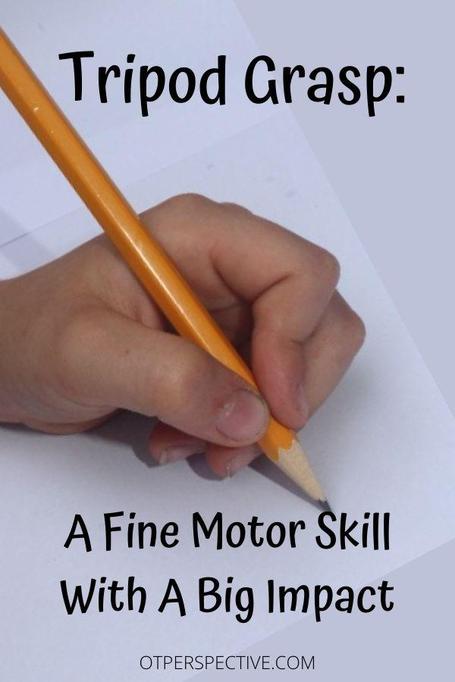
- Letter formation practice - Writing words carefully sitting on a line, using the Little Wandle mantra phrase to support correct letter formation. When children write, it is important to notice how they hold their pencil/pen/mark making implement as we encourage a 'tripod' grip.
- Pinch: Use your thumb and index finger to pinch the pencil about 1–2 cm above the tip.
- Rest: Rest the pencil on the side of your middle finger.
- Tuck: Curl your ring finger and pinky finger into your palm for stability.
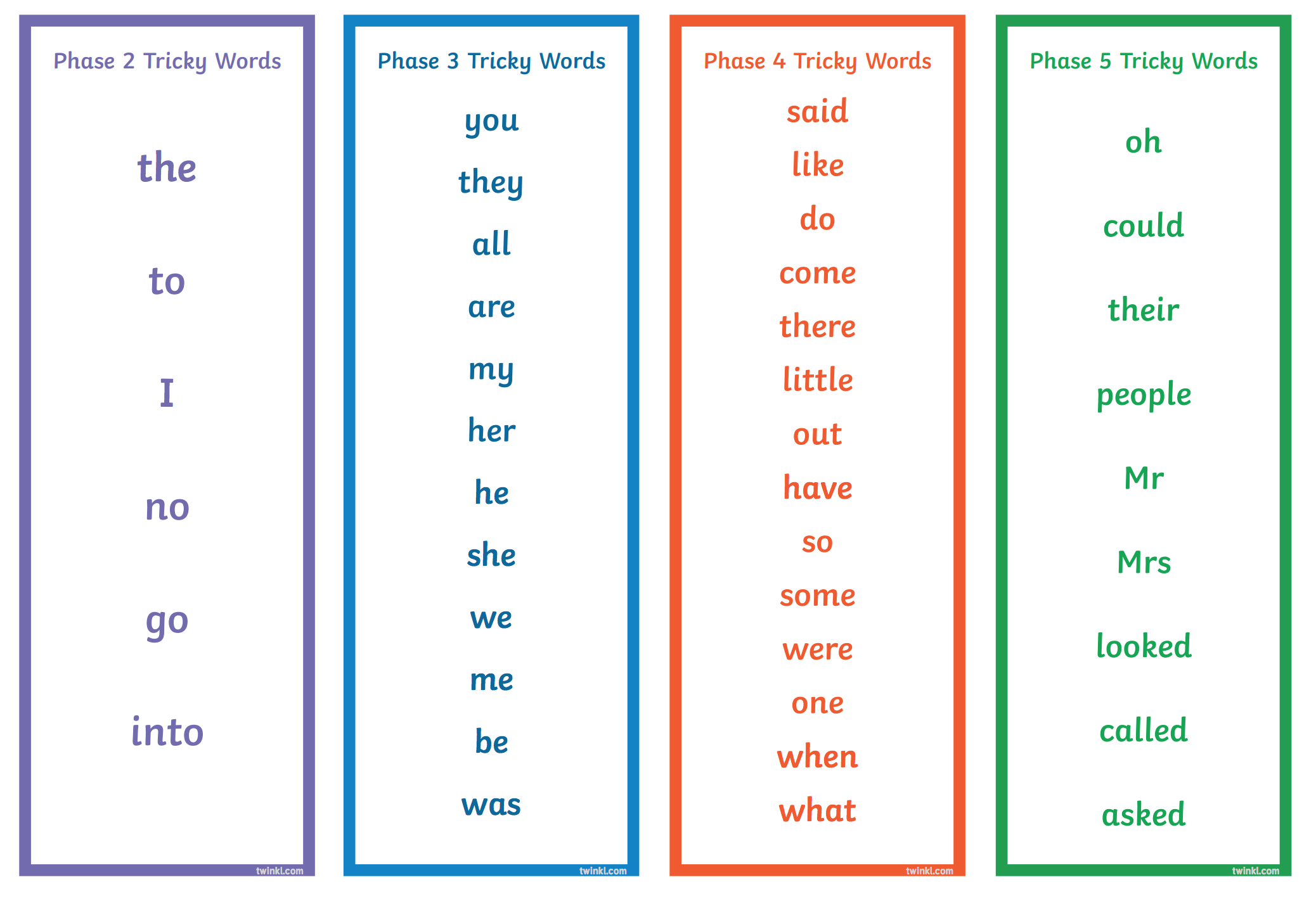
- Regular practice of recognition of the Little Wandle Phonics scheme phase 2 and phase 3 tricky words and regular practice of the phase 2 and phase 3 graphemes.
- How to pronounce the Phase 2 and 3 phonemes: https://www.youtube.com/watch?v=TTe5_Em0BHQ
- Daily reading practice - it is crucial that you engage in daily reading with your child; this could be through singing rhymes, poems and songs also as well as reading stories. It is really beneficial to read aloud to your child each day. This will prepare them to succeed as a reader. Bedtime stories are so valuable to encourage good future reading habits with your child.
- Daily number/counting practice - Counting up to 10 and beyond. Sing number songs and rhymes. Using mathematical language such 'more' and 'fewer'-this could be done when playing or when preparing food together. Go on a number hunt around the home or outdoors-focus on identifying numerals 0-10. Order numerals to 5, then 10 and 20.
For more detailed information on the phonics scheme we follow, please see the Little Wandle website: https://www.littlewandlelettersandsounds.org.uk/ and click on the parents tab.
We will be doing lots of writing in a variety of contexts and for varied purposes, encouraging the use of the letter formation as we learn them.
We will be working hard on our speaking and listening skills, having paired discussions with our 'talk partners', telling our news and sharing lots of stories and rhymes. We will be using the Tales Toolkit approach ( https://talestoolkit.com/) to support shared narratives and independent story telling.
Phonics websites
Mr Mc is doing fun and interactive daily phonics lessons for children age 4-5. He focuses on new digraphs and has lots of different ways to revisit already learnt sounds.
https://www.youtube.com/channel/UCTcZnvuTeovlznioLRo0GOA/videos
https://monsterphonics.com/games/
http://www.letters-and-sounds.com/phase-3-games.html
https://www.topmarks.co.uk/english-games/5-7-years/letters-and-sounds
https://www.ictgames.com/mobilePage/literacy.html
https://www.teachyourmonstertoread.com
https://www.bbc.co.uk/cbeebies/shows/alphablocks
Phonics apps
Jolly Phonics Lessons
Meet the alphablocks
Read with phonics games
First words sampler
Teach your monster to read
Maths websites
https://www.topmarks.co.uk/Search.aspx?Subject=16&AgeGroup=1
https://www.bbc.co.uk/cbeebies/topics/numeracy
https://www.bbc.co.uk/cbeebies/shows/numberblocks
Maths Apps
Kids counting
Maths Tree
Bugs and Numbers
Busy things
Maths ages 3-5
Maths YouTube videos
Jack Hartman
https://www.youtube.com/user/JackHartmann
Monkey floss counting backwards from 20
https://www.youtube.com/watch?v=8hD26XpuUCc
2D shape song
https://www.youtube.com/watch?v=WTeqUejf3D0
3D shape song
https://www.youtube.com/watch?v=2cg-Uc556-Q
Numberjacks
https://www.youtube.com/channel/UCWKuiktSh-V3E4ysPU0VC3Q
Numberblocks
https://www.youtube.com/channel/UCPlwvN0w4qFSP1FllALB92w
Counting by 10s
https://www.youtube.com/watch?v=-gmEe0-_ex8
Counting by 5s
https://www.youtube.com/watch?v=cJ4jV14Oz5I
El Nombre for number formation
https://www.youtube.com/watch?v=VB6RGn7x4ks
Money song
The Early Years Framework
As you may already be aware, the DFE (Department for Education) have introduced a new EYFS (Early Years
-
Development Matters 2021 New EYFS Framework
-
What to expect in the Early Years A guide for parents/carers
Useful Information for parents from the NSPCC
Positive parenting (nspcc.org.uk)
Look Say Sing Play: to build your baby’s brain every day (nspcc.org.uk)
Handle with care: How to keep your baby safe (nspcc.org.uk)
Talking about difficult topics | NSPCC
Helping Your Child Cope with Your Divorce or Separation | NSPCC
Online Safety for Children - Tips & Guides | NSPCC
Useful Information for parents from Early Education
Babies - learning starts from the first day.pdf (early-education.org.uk)
Children as artists.pdf (early-education.org.uk)
Going out to play and learn (3).pdf (early-education.org.uk)
Helping children cope with change.pdf (early-education.org.uk)
Helping children with their behaviour.pdf (early-education.org.uk)
Making their mark - children's early writing.pdf (early-education.org.uk)
Maths is Everywhere.pdf (early-education.org.uk)
Questions and answers.pdf (early-education.org.uk)
Science all around.pdf (early-education.org.uk)
The road to reading.pdf (early-education.org.uk)
Toddlers and very early learning.pdf (early-education.org.uk)
Useful Information for parents from BBC/CBeebies
Tips and clips for good oral hygiene and teeth brushing
-
Support with Oral Hygiene Attached is some advice from the NHS for good dental care for your child.
Reception Curriculum Overview 2020-21
Activities to support your child as they start Reception
-
Numberblocks Play along with the Numberblocks and have fun with numbers.
-
Alphablocks Play along with the Alphablocks and have fun with the letters of the alphabet.
Phase 1 Phonic Home Learning Activities
Phase 2 Phonic Home Learning Activities
-
Phase 2 sounds Click here to look at the Phase 2 Sound-mat and to hear how the sounds are pronounced correctly.
-
Phase 2 tricky words Click here to listen to the Phase 2 'tricky words song' which we sing in our phonics lessons.
Phase 3 Phonic Home Learning Activities
-
Phase 3 sounds Click here to look at the Phase 3 Sound-mat and to hear how the sounds are pronounced correctly.
-
Phase 3 tricky words Click here to listen to the Phase 3 'tricky words song' which we sing in our phonics lessons.
Phase 4 Phonic Home Learning Activities
-
Phase 4 sounds Click here to look at the Phase 4 Sound-mat and to hear how the sounds (blends and clusters) are pronounced correctly.
-
Phase 4 tricky words Click here to listen to the Phase 4 'tricky words song' which we sing in our phonics lessons.
Maths, Writing and Phonics activities ideas
- Phonics-and-Reading-information-sheet-for-parents_Secured.pdfPDF File
- Maths-information-handout-for-parents_Secured.pdfPDF File
- eyfs-help-your-child-with-maths-poster-for-parents.pdfPDF File
- eyfs-help-your-child-with-phonics-poster-for-parents.pdfPDF File
- eyfs-help-your-child-with-writing-poster-for-parents.pdfPDF File
- 10 top tips on reading with your child.docxDOCX File
- Parents - how to read a story.docxDOCX File
TENTEN PARENT PORTAL DETAILS